One-on-one coaching
As a kid, I was the best basketball playmaker in my village. I was invited to play for teams from neighboring villages. I used to train alone, me and the basketball that I called my “girlfriend”. I would wake up at 4 AM to train in the chilly morning.

Everything changed when I moved to the capital for university. I started strong impressing everyone with my skills. Then something unexpected happened.
Within a few months, I ran into players with much more refined skills. Despite all the self-training, I couldn’t keep up with them. I kept asking myself: how did they improve so much with less effort?
That’s when I noticed many of them had personal coaches. These coaches guided them, corrected their techniques, and planned their fitness routines.
It felt unfair. My background didn’t allow for personal coaches. I got frustrated and gradually stopped playing basketball.
Looking back, I learned two things:
There's no concept of fairness. If you have an advantage, you should take it.
I was playing basketball in ultra-hard mode. It was not just about playing; it was about training smart.
Having a coach shortens your learning curve because you are leveraging their experience. These players were benefiting from their coach’s 10,000+ hours and all the mistakes the coach had already made.
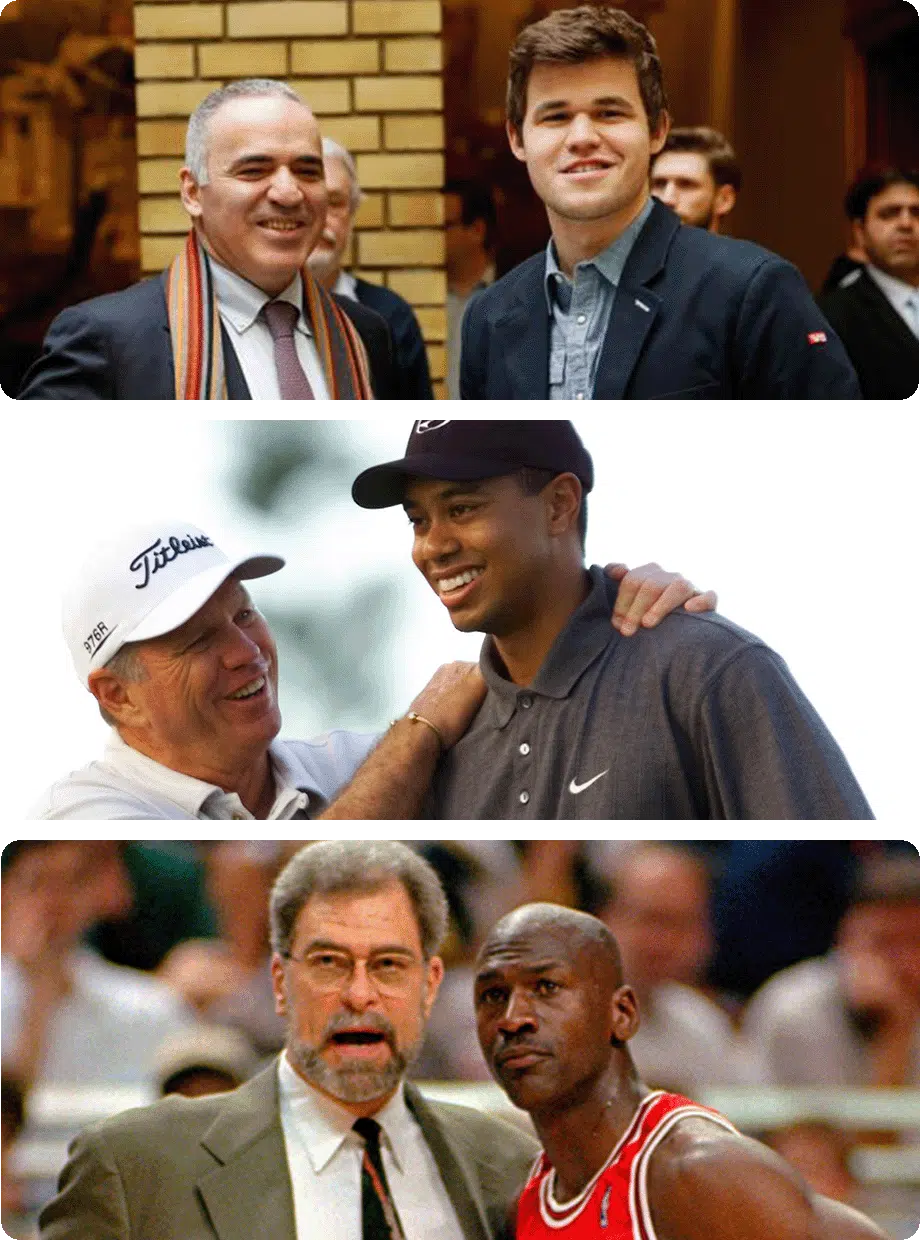
Look at any all-time great and you will see they had a great coach.
Trying to figure things out on your own, but not making the progress you expected. It feels like something is missing. We all have blind spots.
That’s where a coach comes in. They help you see what’s holding you back. But not all coaches are equal. Just like a bad personal trainer can lead to injury, the wrong coach can waste your time, energy, and money.
This is not a course. You already have the courses. This is where we take your situation and work through it together. We don’t move randomly. We follow a path. The goal is to make you think like an architect.
We begin by discussing your current situation. Based on that, I suggest the first step.
Each step is focused. It may involve watching a YouTube video, reading a PDF guide, completing a coding assignment, or making a system design decision for a real use case. That use case may come from something I am working on now, something I have dealt with, or something I created for the assignment.
After each step, you send me a recap of what you understood. I review it, send you feedback and only then we move to the next step.
Start a chat with me on Reddit.